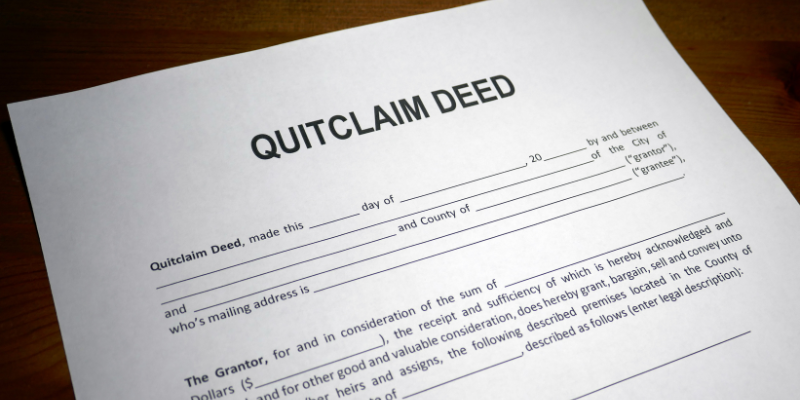
Selling a house in Washington using a quitclaim deed has both advantages and disadvantages, as it allows a property owner to transfer their interest without guaranteeing the title, making it useful for quick transfers between family members or business partners; however, it can also lead to reduced buyer confidence and potential title issues, which may create challenges for sellers. Because of these risks, it is important to fully understand the implications of using a quitclaim deed, and Northwest Real Estate Solutions offers a complete guide that covers the essentials, potential risks, and practical tips to help sellers determine the best way to sell their house in Washington.
Understanding Quitclaim Deeds Made Simple for Sellers
Anyone engaging in property ownership transfers should understand what a quitclaim deed is. Despite the complicated name, a quitclaim deed (or quit claim deed) actually makes property ownership transfers easier by relinquishing ownership rights to a property without guaranteeing a clear title. This type of deed is frequently used in divorce cases and when property is given as a gift. However, compared to warranty deeds, quitclaim deeds have significantly more limitations that are important to understand for practical application.
The Basics of a Quitclaim Deed
A quitclaim deed is among the simplest forms of deed. It provides no guarantees concerning the property title. By preparing a quitclaim deed, you have relinquished ownership interest in the property, but have not guaranteed the title is free of claims, restrictions, or defects. Because of its simplicity, a quitclaim deed is often used when there is a high level of mutual trust. A quitclaim deed is often used in family transactions, among divorcing couples, or those with a close family relationship. A divorced spouse may give a quitclaim deed to relinquish the property rights, thus swiftly changing the ownership of the property.
Because a quitclaim deed makes no guarantees, it also means ownership claims, defects, or liens on the property transfer to the new owner, which some people may find undesirable. A quitclaim deed is often effective in removing a title defect or clarifying a defect in the title caused by a minor clerical error. It is a legal accepted that a quitclaim deed establishes the transfer of property rights. As long as the deed is prepared, filled out, and signed correctly by the grantor and grantee, there should not be any legal problems associated with a quitclaim deed.
| Feature | Purpose | Advantages | Limitations | Common Scenarios |
|---|---|---|---|---|
| Simplicity | Transfer property ownership quickly | Minimal paperwork | No warranty on title | Family transfers |
| Flexibility | Address ownership changes | No need for title insurance | Potential for title defects | Removing co-owner |
| Expediency | Resolve property disputes | Quick processing | Limited legal protection | Divorce settlements |
| No Title Guarantee | Transfer interest without guarantee | Cost-effective | Uncertain ownership rights | Clarifying boundary issues |
This table encapsulates the critical aspects and applications of quitclaim deeds, assisting sellers in understanding their functionality and limitations.
Common Uses for Quitclaim Deeds
In divorce settlements, quitclaim deeds are often used, as well as in other personal situations where a change of ownership of real estate is necessary. It is a quick and cost-effective way to modify ownership for all parties involved. To modify ownership claims of real estate in a trust situation, particularly in a family situation, it is a fast, convenient way to eliminate ownership claims.
While it may offer a sense of simplicity, the introduction of a quitclaim deed will only create more problems. Problems such as an absent title insurance open the door to large liability issues, such as the lack of protective warranties if a dispute arises. Although the absence of legal complexities wrapped around a quitclaim deed could make it appear simple, the ease of a quitclaim deed could lead to even more legal complexities. While liability risks are inherently placed on the buyer, the absence of a warranty claim requires the buyer to do the title search, leaving responsibility for claims on the buyer.
Legal Requirements for Quitclaim Deeds in Washington
For a property seller in Washington state, looking into the legal aspects of executing a quitclaim deed is necessary. Property transfers are regulated by law, and sellers are legally required to know and prepare the appropriate legal instruments for the transfer to minimize legal issues moving forward. Additionally, knowledge of county rules and the associated excise taxes can simplify the deed transfer for sellers.
What Sellers Need to Know Before Using a Quitclaim Deed
Quitclaim deeds do not assure a clear title to the property; thus, the grantor’s interest is transferred without any warranty. This deed is ideal for situations like transfers between family members or divorce proceedings. Since the exact intent is important in real estate transactions, documentation as to what, how, and the reason for the transfer is exact. This means the deeds must have the legal names of the grantor and grantee, a full legal description of the property, and all the required signatures. Each county recording office in Washington State has its own requirements, and it is important to consult an attorney on Washington quitclaims or Washington State real estate law, as this will avoid legal oversight.
Washington State excise tax obligations related to the transfer of quitclaim deeds also need to be considered, as these taxes are usually imposed on the sale price or the fair market value of the property. Evaluating these tax and legal issues with an attorney or tax advisor will help avoid these issues. Sellers using a quitclaim deed in Washington must take these legal and financial issues seriously.
In order to assist sellers who are considering using a quitclaim deed, here are some crucial steps they should follow:
- Conduct a complete property title search to identify possible liens or encumbrances.
- Obtain specific advice from an attorney and have them review the pertinent documents.
- Confirm that the quitclaim deed contains an accurate and complete legal description of the property.
- Check that the names and signatures on the documents are consistent to avoid future claims.
- Know the excise tax liability and plan for it.
- Prepare documents that comply with the recording requirements of the particular county.
- If you need title insurance, consider other types of deeds.
By proactively taking these steps, sellers can confidently and comfortably maneuver through quitclaim deed transactions.
How to Ensure Compliance with Washington Laws
Managing Washington’s legal frameworks related to quitclaim deeds and Washington’s legal requirements for quitclaim deeds is an important task. Pull Washington state quitclaim deed requirements, as they will help you collect state-specific legal requirements for the Washington state quitclaim deed. The Washington state quitclaim deed requires the correct legal description of the real property and the correct names of the grantor and grantee. If the Washington state quitclaim deed is incorrect, the County Clerk may refuse to process the quitclaim deed. The Washington state property transfer excise tax is based on the value received or the value of the property assessed located in Washington state. If you are the seller of the property, you may be liable to pay Washington state property transfer excise taxes.
Completion of all county requirements pertaining to the recordation of deeds is one important county responsibility. Local County Recorders are responsible for keeping real estate records, and each county may have slightly different rules for deed recordation. Knowledge of all county requirements allows for the recording of the deed and for the legal transfer of ownership. Complying with local laws circumvents sellers from the legal issues with ownership of real property or ownership of property and its transfer to another.
Pros and Cons of Selling with a Quitclaim Deed in Washington
There are benefits and risks for sellers when selling a house via a quitclaim deed. Most family transactions, for example, quitclaim deeds, allow for easy and rapid transfers. However, from a seller’s standpoint, a warranty deed offers more protection than a quitclaim deed. From a seller’s standpoint, advantages exist, but when risks, and disadvantages, sellers should see all sides of the situation and not be hasty when transferring the property.
Advantages of Using a Quitclaim Deed
Selling a property using a quitclaim deed can be beneficial. The most common is the forgiving approach to a family member, which does not require the grantor to provide any additional paperwork. This is the most direct deed type, avoiding all other deed complications to save money, especially on no title insurance policies or guarantees. This deed can also be used to preemptively avoid probate and simplify the estate administrative process. For a relocation of property access among heirs, or to change ownership control of a family trust, a quitclaim deed is valuable for avoiding complex and lengthy probate court delays, especially when the court process is time-sensitive.
While it’s necessary to explain the fact to family members needing trust for a quick deed transfer, avoid negative surprises like a title without liens or claims. The best use of a quitclaim is clear mutual intent. Legal advice can improve the outcome of these agreements. Trust is necessary and intent clear, even more so when a quitclaim deed is involved, where less mutual agreement is better.
Potential Risks and Drawbacks
Although there are benefits to using a quitclaim deed, there are a number of risks involved that should be noted. The main issue involves the fact that quitclaim deeds offer no protection against title problems. Since the grantor of a quitclaim deed has no liability to the grantee for defects or claims against the title, they are not required to provide any protections. This absence of any liability creates susceptibility to litigation regarding the deed when issues arise with the title post-transfer, such as liens that were not resolved prior to the transfer.
Another risk involves the possibility of a transfer that is not fully complete. This can happen if the deed is not fully or appropriately completed, or if any of the property’s legal descriptions contain errors, or if the property is partially described, which can cause the transaction to be rendered invalid. Because quitclaim deeds have very few requirements, they are very risky to complete. Problems can easily arise if no legal advice is taken regarding the deed transfer, especially if those problems can be easily corrected.
Key Tips for a Smooth Home Sale in Washington
With a quitclaim deed, selling a house in Washington can be a smooth process. Sellers can eliminate many hurdles by focusing on the key aspects of the property transfer, including proper document preparation and careful execution of each step. Working with a company that buys homes in Seattle or nearby cities can further simplify the process and help speed up the sale. Additionally, understanding the intricacies of the real estate market can give sellers an added advantage.
Preparing for a Quit-Claim Property Transfer
Careful document preparation is essential for any quit-claim property transfer in Washington State, particularly for the Seattle area, which has a very competitive estate market. The step is to carry out a legal review to identify any area, state, federal, jurisdiction, and municipal compliance issues. This will include the correct formatting of a quit-claim deed and all other documents, including the grantor and grantee party identification and legal description of the property. Additionally, in regard to the title, you need to review the title legally for any claims or liens. The buyer’s risks will include any legal encumbrances and unresolved issues in a title review. The quit-claim deed will not talk about claims to the title and will not offer any title guarantee to the buyer. Legal encumbrances can include anything undocumented, so take the initiative to legally evaluate any issues that might be present.
Each jurisdiction has its own rules, particularly for excise taxes and document recording fees. Familiarize yourself with the prescribed recordation document box to ensure the recording can be executed without delay. Preparing for the excise payment will comply with document recording expectations and comply with all the requirements. A compliant transfer of ownership will be a successful transaction. Experienced sellers are more qualified to prepare for a quit-claim deed transaction and all the relinquishments that go with it. Sellers ensure that the title will be encumbered and legally clear.
Completing the Deed Transfer Process in Seattle Estate Markets
Sellers must expertly address the legal and practical challenges involved in completing a deed transfer in Seattle’s ever-changing estate markets. Because of the peculiarities of a quitclaim deed, it is critical for the deed to be legally correct. Therefore, the process of obtaining open and clear signatures from all the parties concerned is critical. Each signer must represent a minimum of one agreed transfer. Authentication of each signer, however, is required to confirm and thus, legally effectuate, the transfer and shift in ownership. This essentially describes the complete transfer intent of the grantor and grantee, which is required in order to effectuate a legal change of title. After all signatures have been authenticated, the transferor must then submit the quitclaim deed to the proper county office. Each county has its own policies when it comes to the recording of property deeds, so it is important that all county policies are followed by the transferor.
A transferor is able to achieve a smooth recording process by supplying the deed in the requested format as well as remitting any recording charges associated with it. The clock starts to run on the transfer and selling of the real estate once the deed is furnished. If it is presented outside of the recordation period, an ownership dispute could arise, or an owner could set a tax on the property. The state of Washington is unique in that its excise tax law forces the transferor to pay a tax on the greater of the property’s sales price or its estimated current market value. The transfer of the deed is closed once the county office performs its last review and once the office confirms that it exercises its rights in Seattle to be vested in the future deals of the estate.
Conclusion: Making the Right Decision for Your Washington Property

You will want to think through the potential advantages and disadvantages of selling your property in Washington using a quitclaim deed. In regard to property deed, Washington state law provides a balance between certainty and speed. A quitclaim deed is fast and is good in situations where there is a lot of trust, like family. A word of caution, though; without the title protections that come with warranty deeds, there is a potential risk to you. Your choice of action is ultimately determined by the level of risk you are able to take, given the circumstances specific to your transaction.
When selling a house in Washington state with a quitclaim deed, you want to be sure to meet the legal requirements as stipulated by the law. Due to the Washington state recording and excise tax requirements, it is essential that all documents are prepared in a meticulous manner to ensure an accurate and complete transfer of the property. Paying close attention to detail will mitigate legal troubles that may arise in the future. Your efforts will protect the interests of both the grantor and the grantee. Should you require clarity on the legal side of things, or you are unsure of whether your situation is suited to a quitclaim deed, you are advised to consult a qualified attorney who is familiar with Washington’s estate laws.
In Washington state, there are unique challenges and risks involved with selling a house using a quitclaim deed. Although there are situations where this can be a quick option, it is important to ensure that all legal and title requirements are properly addressed. Working with cash home buyers in Washington or surrounding cities can also provide a faster and more convenient selling option, especially if you want to avoid complications. You may still wish to speak with a legal professional to better understand potential issues and available resources so you can make informed decisions.
FAQs
What is a quitclaim deed, and when is it commonly used?
A quitclaim deed is a type of deed used to transfer rights of real property. It does not guarantee that the title is clear. Quitclaim deeds are used in cases where there is mutual confidence between the parties, such as transfers among family members, transfers during a divorce, or gift transfers of property.
Are there risks associated with using a quitclaim deed?
Yes, using a quitclaim deed involves risks. It comes with no warranty against title problems, meaning any existing liens or claims concerning the property transfer to the new owner unsatisfied. This can create problems from a legal standpoint regarding title claims.
How does a quitclaim deed differ from a warranty deed?
Although both documents convey ownership of a property, a quitclaim deed offers no title guarantees, whereas a warranty deed offers protection against title defects. Therefore, a quitclaim deed is typically less protective of the buyer.
What should sellers consider when using a quitclaim deed in Washington?
Sellers must prepare the quitclaim deed carefully, comply with all applicable laws and regulations, and familiarize themselves with any excise tax obligations. Because this can become complicated, legal input can save a seller from problems later.
What are the legal requirements for executing a quitclaim deed in Washington state?
In Washington state, quitclaim deeds must include accurate details about the property, grantor, and grantee. In addition, they must be filed with the correct county office and adhere to excise tax requirements. Since some local requirements may differ, obtaining legal advice is useful.
Do you need to sell your home using a quitclaim deed? Whether you want to sell quickly, avoid costly repairs, or prefer a hassle-free transfer, Northwest Real Estate Solutions is here to help. We specialize in simplifying quitclaim deed transactions, offer fair cash offers, handle all the details, and ensure a smooth and seamless process. Ready to sell or have questions? Contact us at (541) 399-9535 for a no-obligation offer and get started today!
Helpful Washington Blog Articles
- How to Sell a House in Probate in Washington
- Selling a House to a Family Member in Washington
- Capital Gains Tax After Selling a House in Washington
- Selling A House with Delinquent Property Taxes in Washington
- Do All Heirs Have to Agree to Sell Property in Washington
- How to Sell Distressed Property in Washington
- Do I Need a Lawyer to Sell My House in Washington?
- Sell a House That Failed Inspection in Washington
- Who Pays Closing Costs When Selling a House in Washington
- How to Sell a House with a Squatter in Washington
- Appraisal-Required Repairs in Washington
- Discover the Best and Worst Months to Sell a House in Washington
- Can I Sell a House with a Quitclaim Deed in Washington?
- Sell a House with Water Damage in Washington
- How to Sell an Apartment in Washington