
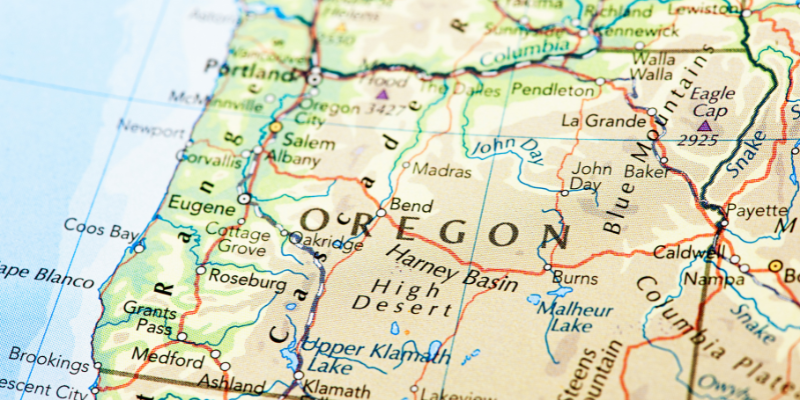
Drive south from Bend on Highway 97 for about two and a half hours, and the price of a house falls by more than half. The cheapest places to live in Oregon are mostly out here, east and south of the I-5 corridor. Bend closed at a $733,000 median over the three months ending July 2026. Klamath Falls, same high desert, same ponderosa pines, posted a $269,000 median across 330 tracked closings over the 12 months ending August 2026. Still Oregon. Two completely different sets of arithmetic for anyone trying to buy, sell, or just stay put.
What Does Housing Affordability Look Like Across Oregon?

A woman in Albany called me about her late husband’s shop, still stacked with table saws and half-finished cabinet doors. Her buyer had walked after the roof inspection came back. She wasn’t chasing a bigger house. She wanted the payment off her back before winter.
Nobody charts that version of affordability. Statewide, Oregon homes sold for a median of $521,368 in June 2026, down 1.4% from a year earlier, with roughly four months of supply on the market, according to Redfin. Four months of supply is balanced. Not a crash, not a frenzy.
Where the strain shows up is the income side. The typical Oregon home now costs about 6.5 times the median household income. Lenders and economists have long called three to four times comfortable, so we’re sitting well past that line.
You gain on one tax and pay on another here. Oregon is one of five states with no general sales tax, so groceries, appliances, and a new water heater all cost less at the register than they would across most state lines. The trade is a heavier lean on personal income tax, which tops out at 9.9%.
Geography drives the rest. The I-5 corridor from Portland through Salem and Eugene carries the jobs, the hospitals, and the prices. Head east over the Cascades or southwest toward the Oregon coast and living costs drop, because housing carries the most weight in any cost of living index. Groceries and utilities move a little. Housing moves a lot.
One thing worth saying plainly: the sticker price isn’t the payment. Taxes, insurance, and, on rural acreage, well and septic upkeep decide whether a cheap house stays cheap. A place that looks like a bargain on paper can cost more month to month than something priced higher in town with city water and sewer. Before you fall for a number, write out every line. Principal, interest, taxes, insurance, dues if there are any. Then add a maintenance cushion for the stuff that doesn’t send a bill until it breaks.
What Are the Cheapest Places to Live in Oregon?
Lists of the cheapest places to live in Oregon land on the same eastern and southern towns every year. Those towns are cheap for reasons, and anybody handing you a list without the reasons is handing you a postcard.
Ontario tops HomeSnacks’ 2026 cost of living ranking, which scored all 80 Oregon places with more than 5,000 residents. Its median home value sits at $305,608 against $499,004 statewide, with rents near $804. It’s out on the Idaho line, about an hour from Boise.
Baker City lands third on that same list with the second-lowest home values in the state, $264,325 by Census figures, and Redfin recently clocked a $265,000 median sale price there. You get restored brick storefronts, the Elkhorn Mountains out the window, and four real seasons. You also get a long drive to a major airport.
Klamath Falls spreads wide. The middle half of its recent sales closed between $190,000 and $370,000, which tells you more than the median does, and I’ve watched that spread trip up buyers who only look at the average. A tired 1950s rancher near downtown and a lake-view build off Hill Road are not the same market. Pricing either one takes local eyes, which is why Northwest Real Estate Solutions in Oregon looks at the block before the comps.
On the southern Oregon coast, Coos Bay is still the value play. Coos County closings ran a $341,000 median in March 2026, and Coos Bay houses were going pending in roughly 20 days. You’re minutes from Bay Area Hospital, the largest hospital on the coast, and the boardwalk downtown. Flood maps deserve a hard look before you write an offer.
La Grande sits in the Grande Ronde Valley under the Blue Mountains and gives you a university, a real grocery run, and low payments. Milton-Freewater, Sweet Home, Madras, Lebanon, Pendleton, and Hermiston fill out the rest of the rankings, and the same names keep reappearing.
Before you commit to any of them, go stay there in the worst month the town has. Eastern Oregon in January is a different place than eastern Oregon in June, and the coast in a winter storm is nothing like the coast in August. While you’re there, check the things that quietly decide whether you can live somewhere. Internet service at the exact address matters more than what the town claims. Find out how far you’d drive for a specialist appointment, and whether any dentist is taking new patients. If you work remotely, make sure your employer has that arrangement in writing rather than as a current mood.
What’s the catch worth naming? Gold Beach has its own small critical access hospital, Curry General, and anything past what a critical access hospital handles means a long drive north. Low price, long road. Rural Oregon mostly runs on that trade.
Is Portland, Oregon Affordable to Live In?

Which brings us to the city everyone actually asks about. Portland’s median sale price was $525,000 over the three months ending August 2026, down 3.6% year over year, with homes selling in about 19 days. Redfin puts overall living costs there 14% above the national average, and the city’s median sale price 32% above the national figure.
Nineteen days is fast for a market that’s supposedly soft.
Head downtown and the numbers tell a different story. Condos and lofts in Downtown Portland moved at a $322,000 median over those same three months, up 7.4%, though they averaged 73 days on market. That’s the widest affordability gap inside one city anywhere in the state. A downtown unit for well under the citywide figure, if you can stomach HOA dues and a slower resale.
If a downtown condo is on your list, read the HOA minutes and the reserve study before you read the listing description again. Dues climb. I’ve seen a building facing a deck repair or a plumbing replacement hand every owner a special assessment that wipes out the price advantage in one letter. Ask what the dues cover, what the board has spent in the last few years, and how many units are rentals, because that mix affects financing.
Outer east Portland still holds the detached-house bargains. Lents, Powellhurst-Gilbert, Parkrose, and parts of Montavilla price below the metro average. St. Johns and Sellwood used to, and don’t anymore. These are older houses, mostly, so budget attention for the usual suspects: original wiring, a furnace on borrowed time, and buried heating oil tanks. Those tanks turn up often enough in older Portland neighborhoods. Ask the seller for decommissioning paperwork before you’re under contract.
Early last year I bought a small ranch in Gresham from a widow whose mother had just moved into assisted living in Vancouver. She was making the drive four days a week, the gutters hadn’t been cleaned in two seasons, and the garage was full of her late husband’s fishing gear she couldn’t bring herself to sort. We closed on her timeline. She left the gear behind, which was fine by us. We work the same way across the metro, and on the west side we buy houses in Hillsboro, OR on whatever timeline the seller needs.
Portland is affordable relative to Seattle or the Bay Area. Compared to Baker City, it isn’t close. Both things are true, and which one matters depends entirely on where your paycheck comes from.
How Do You Find Affordable Homes in Oregon?
Medford closed at a $419,000 median over the three months ending August 2026, down 1.5%, with homes going in about 29 days. For southern Oregon, with Crater Lake and the Rogue Valley wine country an easy drive, that’s the best price-to-amenity ratio of any market in the state.
Start with a lender before you start with listings. A real pre-approval, not a website estimate, tells you what your credit, income, and down payment support at current rates. Oregon Housing and Community Services runs down payment help for first-time and first-generation buyers at or below 100% of area median income. It’s worth up to $60,000 or 20% of the price, whichever is less. Your lender or a local REALTOR® can confirm which programs you actually fit.
Our property tax system rewards patience in a way most states don’t. Assessed value growth is capped at 3% a year under Measure 50. The City of Eugene points out that Oregon is the only state where assessed values don’t reset to market value when a home sells. Two neighbors with identical houses can pay wildly different tax bills. Pull the actual tax history from the county assessor before you budget a payment, because the listing’s tax figure is the seller’s bill, not necessarily yours.
Insurance is the line item that wrecks budgets in southern and central Oregon. Wildfire exposure has pushed premiums up hard in some ZIP codes, and a quote takes ten minutes. Get one before inspection, not after.
Then spend money on inspections in the right order. A general inspection is the start, not the finish line. On rural property, add a well flow and water quality test and a septic inspection with the tank pumped so someone can see the baffles directly. In town, get a roof age and a sewer scope on anything with mature trees out front, since I’ve seen those roots crack a line more than once. In a market sitting near four months of supply, you usually have room to ask for repairs or seller-paid closing costs instead of walking away. Closing cost help often does more for a tight budget than shaving the price would. Before you decide which one to ask for, it helps to know how much closing costs are in Oregon and which side of the table usually covers them.
For sellers on the other side of that transaction, the math is different. Commissions, title costs, and repair credits commonly eat 6 to 10 percent of a sale price, and most of that’s what the agents take. When a house needs a roof, and the seller doesn’t have the cash for it, a direct sale to a local buyer like Northwest Real Estate Solutions often nets more than a discounted listing does after concessions.
Did You Receive a Mail Offer From Us About Your Oregon Home?

Sign the wrong offer, and you can burn six weeks, lose your leverage, and watch the price get talked down two days before closing. It happens. It’s avoidable.
We mail offers on Oregon houses we’d genuinely buy, based on county records, comparable sales, and a guess at condition. A guess is all it can be from the outside. So the number in that letter is a starting point, and it moves once we’ve walked the property or talked through what’s going on inside.
Have you ever gotten three of those letters in one week? Most homeowners have. The way to sort them is boring and effective: ask who’s buying. Ask for proof of funds. Ask whether the contract will be assigned to someone else before closing, and ask which title company they use; then call that title company and confirm they’ve closed sales with the buyer before.
A legitimate buyer answers all four without flinching.
You don’t have to sign anything to get those answers, either. A mailed letter doesn’t bind you to anything, and no honest buyer needs a signature before they’ll tell you who they are. If someone pushes you to sign today to “lock in” the price, that’s your answer about them. Ask for the offer in writing, read the closing date and any assignment language, and if a clause doesn’t make sense, send it to an attorney or your title officer. Any of the reputable cash home buyers in Oregon City will give you that time without a fight.
What we won’t do is tie you up. No inspection contingency we hide behind, no last-minute repair deduction after you’ve already packed. If the roof is shot and the crawlspace is wet, we’d rather price that in on day one and hold our number. It’s also why we’d rather see the house once, in person, than guess twice. One walkthrough settles most of what a letter can’t.
One pattern I keep seeing: sellers who feel rushed take the first offer, and sellers who ask two questions get a better one. Those questions cost you nothing. If the letter came from us, the property address is on it. We’re glad to walk you through exactly how we got to that figure, line by line, including what we think it costs to fix.
Have a Question or Want a Free Oregon Market Report?
Small-market data is fragile in ways the big sites don’t advertise. Klamath County recorded 52 sales in a single month in early 2026. When a place closes fifty-odd homes in a month, one unusual sale swings the midpoint by tens of thousands of dollars. An automated estimate on a rural Oregon property can miss by a wide margin in either direction, and nothing on the page warns you.
So we pull actual closings when someone asks about their house.
A man called on a weekday afternoon about his mother’s place in Roseburg. Thirty years of belongings, three siblings in three states, a detached garage with a boat that hadn’t run since the nineties, and a chest freezer nobody wanted to open. All four heirs wanted the same thing: one clean exit, no cleanout, no listing photos of their mother’s kitchen.
Ask, and we’ll put together a plain market report for any Oregon property. Recent nearby sales, days on market in your area, and an honest range for what a retail listing would net versus a direct cash sale. No cost, no obligation to sell. Some people use it to decide to list with an agent instead, which is a perfectly fine result. Knowing the number is the point. If you’d rather run the listing side yourself first, we broke down the average cost to sell a house in Portland, OR line by line.
Request the comparable addresses, too, not just the summary. Drive them if you can. A sale two streets over can look identical in a spreadsheet and turn out to be a remodeled house with a new roof. Seeing that for yourself tells you more about your own price than any estimate will.
Frequently Asked Questions
How fast can you actually close?
Seven to fourteen days is typical once title comes back clean. Cash means no lender timeline, so the schedule is mostly title work and your calendar. If you need sixty days because your next place isn’t ready, we’ll take sixty days. The date is yours to pick.
Do I need to clean out the house first?
No. Leave the boat, the freezer, the boxes in the garage. We handle removal after closing. Take what matters to you and walk away from the rest. For most families sorting an inherited home, that’s the whole reason they called.
What if the house has code violations, a failing septic, or a tenant who won’t leave?
We buy those. Septic trouble is common in rural Douglas and Coos counties, and unpermitted additions show up constantly in older Oregon housing stock. Tell us upfront so it’s in the number instead of a surprise later.
Will you pay what my house is worth?
Not retail, and we won’t pretend otherwise. You’re trading some price for speed, certainty, and zero repairs or commissions. The honest comparison is a cash offer against a listing price minus agent fees, repairs, holding costs, and the months it sits. Sometimes selling with an agent wins. We’ll tell you when it does.
Do I owe anything if I turn the offer down?
Nothing. No fee, no contract until you sign one, no strings on the market report either.
What about the probate process?
If the estate hasn’t cleared probate, we can still start. Oregon’s timeline varies by county, and we’ve closed plenty of sales where the paperwork finished while we waited. Ask your attorney where things stand, and we’ll work around it.
If you’re somewhere between “maybe someday” and “I need this handled by the end of the month,” a conversation costs you nothing. Reach out to Northwest Real Estate Solutions with the address, tell us what’s going on with the property, and we’ll come back with a number and the reasoning behind it. Take a week to think it over, or take a month. The offer isn’t going anywhere, and neither are we.
Helpful Oregon Blog Articles
- Who Is Responsible For HOA Fees At Closing In Oregon
- Should I Replace My Roof Before I Sell My House
- Cost to List on MLS in Oregon
- How to Sell a House With Tenants Not Paying Rent in Oregon
- Quitclaim Deed Divorce in Oregon
- Can Medical Bills Take Your House In Oregon
- When Is It Too Late To Stop A Home Foreclosure In Oregon
- Cheapest Places to Live in Oregon
- How to Find a Realtor in Another State Before You Move