
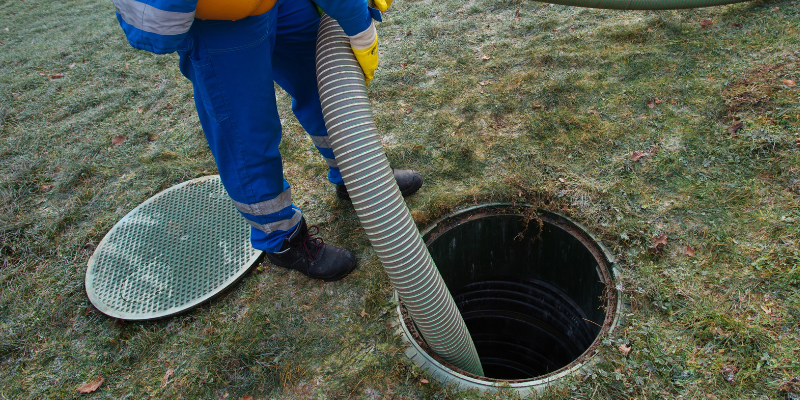
A failing drainfield picks its moment. It waits for the wettest stretch of February, then pushes gray water up through the lawn about ten feet from the back door. If that’s your yard and you were planning to list this spring, you’ve got decisions ahead. Selling a house with septic tank problems in Oregon comes down to a few honest choices. Some sellers fix the septic system first. Others sell the house as-is and let the next owner handle the dig. Not every option means writing a huge check.
What Is a Septic System and How Does It Work?
Picture a 1978 concrete tank under the side yard, doing quiet work for four decades. Now picture that same tank with a cracked outlet baffle, letting solids slide downstream into the drainfield lines. Two frames tell the whole story of septic failure.
Wastewater from every drain in the house flows to the tank. Solids settle to the bottom as sludge, grease floats to the top as scum, and the clearer liquid in the middle leaves through a pipe to the drainfield, also called a leach field. Buried perforated laterals spread that liquid into gravel trenches. Soil finishes the treatment before the water reaches the groundwater. It comes down to gravity, bacteria, and dirt, and there’s nothing complicated.
Dirt does the heavy lifting, and Oregon soil changes across short distances. Heavy Willamette Valley clay drains slowly, which is why so many valley properties use pressurized or sand-filter systems instead of simple gravity trenches. Sandy ground near the coast percolates faster. The Department of Environmental Quality walks through the basics on its onsite wastewater pages, and that’s a better starting point than any contractor’s website.
Pumping keeps everything else alive. Most households need it every three to five years, and 2026 pricing runs roughly $250 to $600 per visit, with most owners landing near $400. Skip it long enough, and sludge migrates into the laterals, where it plugs the soil interface. Once that happens, pumping won’t save you. A tank is repairable. A drainfield suffocated by solids usually isn’t.
If your septic system needs more work than you want to take on, contact us for a cash offer on your Oregon house with no pressure or obligation.
What Does Oregon Require for Septic Systems Before You Sell?
Nobody from the state will knock on your door and demand a septic inspection before you sell your house. That isn’t the same thing as being off the hook.
Oregon requires a statutory disclosure form from most residential sellers, and the exact wording lives in ORS 105.464. It asks whether the property sits on an onsite system, when the tank was last pumped, whether the system has been repaired or altered, and whether you know of any sewage problems. You answer from your actual knowledge. Once you deliver the form, the buyer has five business days to revoke their offer in writing unless they waived that right earlier. Late disclosures wreck contracts that looked solid, and I’ve watched it happen more than once.
Does an “as-is” clause solve this? No. As-is language reinforces the buyer’s duty to inspect, and it can shield you on defects you truly didn’t know about. It won’t protect a seller who knew the drainfield was surfacing and stayed quiet.
Oregon also sets the format inspectors have to follow. The Existing System Evaluation Report is the standardized form a qualified inspector fills out. OAR 340-071-0155 spells out who’s allowed to sign one: certified installers, certified maintenance providers, registered environmental health specialists, licensed engineers, and NAWT-certified inspectors. The rule requires a records review, a field inspection, and a sketch showing where the major components sit. DEQ lists qualified evaluators through its Oregon Septic Smart program. DEQ also suggests you be on site during the evaluation, so you can ask questions while the lid is open.
Permits and repair applications run through DEQ’s onsite program or through a county acting as its agent, depending on where your property sits. Clackamas runs its own septic program, and it isn’t the only one. Call your county before you assume anything about timelines.
What to Do When Selling a House With Septic Problems in Oregon

One seller I talked with lost her buyer on day 38 because the pumping receipt didn’t match the as-built drawing on file with the county. I’ve seen that same mismatch trip up other closings. Another seller skipped the listing entirely, took a cash offer for less money, and slept fine that night.
Both made defensible calls. Sit with that before you panic.
Oregon has a lot of houses on onsite systems. Drive twenty minutes out of Portland toward Estacada, Corbett, or the Yamhill County wine country, and public sewer disappears fast. Same story along the Coast Range, through Josephine County, and across most of the ground between Roseburg and Klamath Falls. The EPA puts more than one in five U.S. households on individual or small community systems, and that share climbs the second you leave the city limits.
Timing matters here, because the statewide market isn’t frantic. Redfin put Oregon’s median sale price at $506,889 in August 2026, down 0.61 percent year over year, with homes selling in a median of 39 days. A market with that much slack lets a nervous buyer walk away and go look at something else on Saturday.
Your septic situation lands in one of three buckets. Fix it before you list. Disclose it and price for it. Or sell the house as it stands. Those same three buckets apply to any expensive defect, and what it takes to sell a house with foundation issues in Oregon follows the same logic.
If you’d rather avoid septic repairs, inspections, and the uncertainty of a traditional sale, Northwest Real Estate Solutions can make a cash offer for your Oregon house as-is.
How Do You Sell a Home with a Failed Septic System in Oregon?
Hide a known failure, and you can be defending a lawsuit two years after you’ve spent the proceeds. That sentence should shape every choice below.
Once you’ve decided to be straight about the problem, four practical paths open up.
Repairing or replacing before you list puts you in the strongest position with financed buyers. Get the site evaluation done, pull the permit, keep the certificate of satisfactory completion DEQ issues once the work passes, and hand that packet to your agent. A new system with paperwork stops being a defect and starts being a selling point.
Selling with a repair credit works when the buyer’s lender allows it and the number is agreed in writing. Risk sits in the appraisal, where an appraiser who flags surfacing effluent can force repairs before funding, whatever you and the buyer arranged between yourselves.
Escrow holdbacks are the middle road. Money sits with the title company, work gets finished after closing, and the remainder goes wherever the agreement says. Not every lender permits this, so confirm it before you build a strategy on it.
Then there’s selling as-is for cash. No appraisal, no lender minimum property standards, no six-week wait on a soil evaluation while your mortgage keeps accruing. You take less money, and you keep your timeline. That’s the trade, stated plainly. This is the lane my company works in, and Northwest Real Estate Solutions buys Oregon properties with failed systems all the time, drainfield and all. If you want to sell without taking on the repair yourself, that is exactly what Oregon cash buyers are set up to do.
One thing I’d avoid: listing at full retail, waiting for an inspection to expose the problem, then renegotiating from a defensive crouch.
What If Your Septic System Is Too Small or Just OK?

A passing inspection means nothing if the bedroom count on paper doesn’t match the house you’re selling. The system passes its evaluation, the tank looks sound, and the laterals accept water. Then the buyer’s agent pulls the permit file and finds a two-bedroom approval on a house now advertised with four bedrooms and a converted garage.
That mismatch kills more Oregon sales than outright failure does.
Onsite systems get sized by bedroom count, because bedrooms predict occupancy and occupancy predicts flow. A finished basement with an egress window and a closet reads as a bedroom to an underwriter and to a county reviewer, whatever you call it in the listing. Add an ADU over the shop and the math gets worse.
You’ve got real options. List the house at the permitted bedroom count and describe the extra space as a den or bonus room, which is honest and legal. Apply to enlarge the system, though soil and setbacks decide whether that’s even possible on your lot. Or let the price absorb the gap.
Marginal septic systems deserve a mention too. An older tank with a working field, no repair history, and no obvious symptoms generates a report full of hedged language. Buyers read hedged language as risk, and they price it in.
A wrinkle worth knowing about: a favorable site evaluation approval stays valid until someone pulls a permit and installs the prescribed system, and it carries to the next owner. Cutting, filling, or a new well in the wrong spot can void it. If you have an old approval letter in a drawer, dig it out before you list.
How Do Septic Systems Affect Buyer Financing in Oregon?
You might figure septic is a private matter between you and the buyer, since no bank is inspecting your drainfield. The appraiser is, though, and the appraiser works for the lender.
HUD’s rules for FHA loans are blunt about it. The appraiser has to examine the septic system for signs of failure or surface evidence of malfunction, and problems you can plainly see mean repair or a further inspection. HUD also accepts onsite systems where connecting to public sewer isn’t financially reasonable, as long as the system works and meets local health rules.
Properties with both a well and a septic system face distance standards. HUD’s handbook calls for a well at least 50 feet from the septic tank, 100 feet from the drainfield, and 10 feet from any property line. Stricter local rules win where they exist. Older rural parcels around Molalla, Scio, or the McKenzie corridor sometimes miss those separations by a few feet, and no amount of negotiation fixes geometry.
VA and USDA underwriting leans on the same handbook. Conventional lenders have more discretion, though most follow whatever the appraiser writes.
Practical translation: a surfacing drainfield removes FHA, VA, and USDA buyers from your pool right away. It thins the conventional pool too. What’s left is cash and hard-money financing, which shrinks your market and moves pricing power to the other side of the table. A cash-for-houses company in Eugene and other Oregon cities may provide another option if traditional financing isn’t available.
How Do You Negotiate When Septic Becomes a Deal Point?

Who pays for the septic evaluation is a negotiated line in the sale agreement, not a rule handed down from anywhere. Most sellers never read that line before signing.
Negotiation goes better when you control the information. Two or three written bids from licensed installers, obtained before you list, give you something concrete to put in front of a buyer whose contractor cousin quoted a terrifying number over the phone. Buyers negotiate against fear. Fear is expensive, and a written bid is just a number.
Credits beat repairs when you’re short on time, and repairs beat credits when you’re short on cash. Decide which one you are before the first counteroffer lands.
Speed matters more in some Oregon markets than others. Portland homes sold in a median of 19 days over the three months ending August 2026, at a median price of $525,000. A buyer who’s watched three houses vanish in under three weeks has less appetite for a drawn-out septic fight than one shopping a slow rural submarket where listings sit all summer.
Two tactics I’d push back on. Don’t agree to a price cut based on a single worst-case estimate the buyer brought you. And don’t let the repair scope drift afterward, where a drainfield replacement quietly grows into a new tank, a new pump, and fresh landscaping on your dime.
Get the final agreement in writing with a scope attached. Verbal understandings about septic work turn into arguments at the closing table every single time. It also helps to know up front whether the seller is responsible for any repairs after closing in Oregon, because that answer decides how hard you push on scope.
Which Septic Selling Strategy Fits Your Oregon Situation?
How much time do you have, and how much cash can you afford to put at risk before closing? Answer those two honestly, and the path picks itself.
Plenty of time, available cash, a house in decent shape otherwise: repair the system, permit it properly, list at full retail. You’ll recover most of the repair cost and reach every financed buyer in your county.
Some time, no spare cash: list as-is with the evaluation report in the disclosure packet and a repair bid attached. You’ll draw conventional and cash buyers, and you’ll price for the problem up front instead of getting beaten up in renegotiation.
No time, or an inherited property three hours from where you live: sell direct to a cash buyer, including a company that buys homes in Hillsboro and the surrounding Oregon cities, and move on. Investors underwrite septic failures as a line item rather than a reason to walk, which is why closings in this lane run two to three weeks instead of two to three months.
A man called me on a weekday afternoon from Cottage Grove holding an estimate for a new sand filter system that ran past what he’d spent remodeling his kitchen two summers earlier. His shop was full of woodworking equipment he wasn’t hauling anywhere, and he wanted out before winter. We closed as-is; he kept the tools, and the system got replaced on our nickel.
None of these three paths is the smart one. The smart one is whichever matches the constraints you’re living with.
Frequently Asked Questions
Is It Harder to Sell a House That’s on a Septic System?
Slightly, though not as much as sellers fear. A working system with pumping records and a clean evaluation report barely registers with buyers in rural and semi-rural Oregon, where onsite systems are simply how things work. Difficulty scales with uncertainty, so a system nobody can document gives every buyer a reason to discount, delay, or walk.
What Does It Cost to Repair or Replace a Failed Septic System?
It depends on what failed. A pump, a filter, a cracked baffle, or roots in a lateral fall into the low hundreds or low thousands and get handled in a day. A collapsed drainfield means excavation, a soil evaluation, a permit, and a new field, which national 2026 figures put at roughly $3,000 to $15,000. Get at least two written bids, because prices on identical properties vary by thousands depending on how each contractor handles permitting and site restoration.
Do Appraisers Check Septic Systems?
Appraisers note the presence of an onsite system and flag obvious problems, though they aren’t inspectors and they don’t open tanks. Financing type is where it matters. FHA and VA appraisals in Oregon usually trigger a requirement that the system be functional and, in many cases, that paperwork showing a passing evaluation be in the file before the loan funds. Conventional lenders vary by underwriter, and cash buyers skip the question entirely.
Who Pays for the Septic Evaluation, the Buyer or the Seller?
Either one, and it’s negotiable like everything else in the contract. Buyers usually order and pay for it during their inspection period. Sellers who order one before listing spend a few hundred dollars for control of the narrative, which is often the better trade. If you already know the system is failing, paying for the report yourself lets you disclose accurately and price accordingly instead of finding out on day twelve of a thirty-day escrow.
Can I Sell a House in Oregon with a Failed Septic System?
Yes. Oregon doesn’t prohibit selling a property with a failed system. What it requires is honest disclosure, and what the market requires is a price that reflects the condition. Your buyer pool narrows toward cash, and the closing timeline usually shortens rather than stretches, because those buyers aren’t waiting on an underwriter to sign off on a drainfield. Around the mid-valley that pool is mostly cash home buyers in Corvallis and the smaller towns spread out around it.
If you’re sitting on a septic problem and haven’t decided what to do about it yet, that’s fine. Pump the tank, get an evaluation, collect a bid, and see what the numbers say. If the repair pencils out and you’ve got the runway, do it. If it doesn’t, or you’d rather not spend the next three months managing contractors on a house you’re leaving anyway, Northwest Real Estate Solutions can give you a straight number on it as-is. Reach out to us at (541) 399-9535. No pressure either way, and no obligation to take it.
Helpful Oregon Blog Articles
- Who Is Responsible For HOA Fees At Closing In Oregon
- Should I Replace My Roof Before I Sell My House
- Cost to List on MLS in Oregon
- How to Sell a House With Tenants Not Paying Rent in Oregon
- Quitclaim Deed Divorce in Oregon
- Can Medical Bills Take Your House In Oregon
- When Is It Too Late To Stop A Home Foreclosure In Oregon
- Cheapest Places to Live in Oregon
- How to Find a Realtor in Another State Before You Move
- Selling a House With Septic Tank Problems in Oregon