
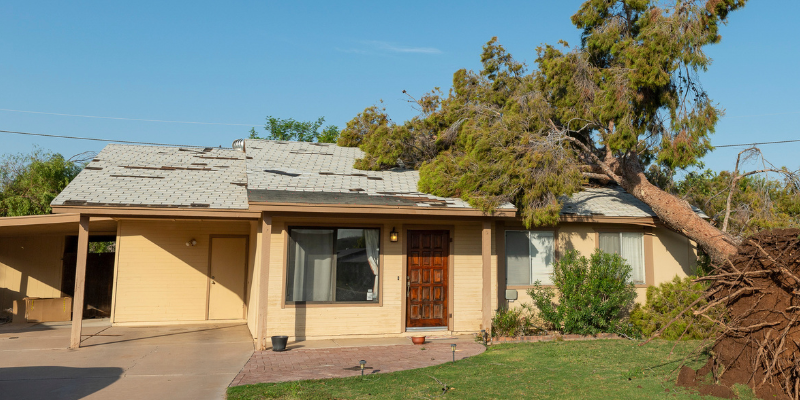
A blue tarp changes the math on a house fast. Your adjuster still hasn’t written a final number. The contractor quit returning calls, and a new job three states away starts in six weeks. You can usually sell your house with a pending insurance claim, although disclosure rules vary by state. Where people lose real money is the paperwork. I’ve bought houses mid-claim and post-claim, plus a few where the claim died after the seller moved and stopped answering the carrier’s letters.
Two things usually settle it: whether you can afford to wait on the carrier, and whether your paperwork protects what you’re owed once your name comes off the deed.
Can You Sell Your House with an Open Insurance Claim?

Sign a standard contract that never mentions the pending insurance claim, and you’ve given your insurer a tidy argument that the benefits aren’t yours anymore. That one gap costs sellers more than any other mistake I see.
You can sell. Your house and your claim are two separate assets, and contract law lets you treat them that way as long as the documents spell it out. When we buy houses in Washington with a claim still open, the house comes to us and the claim stays in your name.
Timing adds pressure too. Even a house with nothing wrong takes a while to sell. Stack a listing period on top of a claim that’s still being adjusted, and you’re carrying a damaged property through two slow processes at once.
Last year, a widow called me after two agent listings expired back-to-back without a single offer. Her roof claim was still open. A brown stain the size of a dinner plate sat on the dining room ceiling, and every buyer who walked through wanted the repairs done first. We bought it for cash, and she kept every dollar of her claim.
Retail buyers aren’t sizing up a damaged house; they’re picturing their furniture in it, and a stained ceiling kills that picture fast. Their agent reads the disclosure, spots an open claim, and starts steering them toward three houses down the street that don’t come with homework. Buyers who stay interested write offers loaded with inspection contingencies and repair demands, and you end up thirty days deeper with nothing to show for it.
If you’d rather avoid the delays and uncertainty of a traditional sale, you can contact us for a cash offer. We can buy your house as-is, even with a pending insurance claim, and help you move forward on your timeline.
What Are Your Options When Selling a House with a Pending Insurance Claim?
You’ve got three ways to handle this. Settle the claim before closing and sell a known quantity. Close with the claim still open, keeping your rights and crediting the buyer for unrepaired work. Or sell as-is at a price that reflects the damage, with the sale and the insurance fight running on separate tracks.
Settling first is the cleanest route when the carrier is working with you and the loss is simple. You take the payment, repair or don’t, and list a house with a known condition and a documented history. Buyers relax, and so do lenders. Time is the catch, and most people in this spot don’t have it.
Closing with the claim open works if the drafting is careful. The buyer gets a credit for the undone work, and you keep the right to collect from the carrier. Both sides also sign an agreement covering what happens if the adjuster wants another look at the attic in March. This setup falls apart when the buyer needs financing. I’ve watched sales collapse right there, because the lender sees the same damage the appraiser just photographed.
Selling as-is for cash moves fastest, since nothing about the sale depends on the carrier’s calendar. Cash house buyers in Seattle and other Washington cities can assess the damage, you close, and your claim proceeds with you as the named insured. Most sellers end up here after adding up six more months of carrying costs. That’s the mortgage, taxes, possibly non-renewed insurance, utilities on an empty house, and a tarp you replace every windstorm.
Don’t let the sale date outrun the claim’s deadlines. Carriers want sworn proofs of loss, recorded statements, and document requests answered on their schedule, and a move in the middle of that sequence is where claims go to die. Set up mail forwarding, give the carrier your new address in writing, and keep a working phone number on file.
Who Owns the Insurance Claim When You Sell Your Home?

Your claim belongs to the policy, not the deed. A homeowners policy is a contract between you and your insurer, and the buyer doesn’t join it just because their name goes on the title. I’ve seen that mix-up trip up buyers at closing more than once.
Washington may tighten the rules governing the transfer of a claim to someone else after a loss. In February 2026, a bill to void post-loss assignments, Senate Bill 6178, passed the Senate 48 to 0. It then stalled in a House committee. Florida already bans these assignments on residential and commercial policies issued on or after January 1, 2023. If you plan to assign your claim, talk to a Washington insurance attorney before closing, not after. Most sellers simply keep the claim.
Your contract language carries the load from here. Start with a reservation-of-rights clause that names the loss and the claim number. A cooperation clause should allow the insurer or an engineer to return to the property, and the contract should state plainly that no insurance proceeds transfer at closing.
A good addendum also specifies who endorses a supplemental check that appears after closing and who retains the original photos and reports. It should state whether the buyer must hold off on repairs until the carrier finishes its inspection. Torn-out evidence hands a carrier a reason to deny.
Bring the title company in early. Closing agents hate any doubt about money tied to the property, and I once watched a closing slide a week over a loss draft notice found on the last business day.
Last, tell your carrier in writing that you’re selling, and ask what it needs to keep the claim active. Save that message. If an adjuster later says the file ended with the sale, a dated record beats anyone’s memory.
How Does an Open Claim Affect Your Mortgage Escrow and Insurance Payout?
If your mortgage company’s name is on the insurance check, there’s a reason. Your lender has an insurable interest in the house, so the mortgagee clause makes it a co-payee on most claim checks. You endorse the check, the servicer endorses it, and its loss draft department holds the money. It releases funds in stages as inspections confirm the work, which can take months on a large loss.
Send the loss draft team everything in one package: the signed contractor agreement, the contractor’s license and W-9, the adjuster’s estimate, and your written authorization. Draw inspections usually occur only after you call to request one. Follow up by phone with your reference number handy.
Most carriers first pay actual cash value, which is replacement cost minus depreciation. The rest, called recoverable depreciation, comes after you finish the work and show proof of cost. Sell first, and you’ll often lose it, because the policy pays whoever actually covers the repair.
Say your roof claim settled at $38,000 ACV with $14,000 in recoverable depreciation still owed. Close without repairing, and that $14,000 stays behind. You’ll usually do better by fixing the roof first or pricing the home to reflect the funded repair than by handing a buyer a half-finished claim.
On a simple roof job, it often makes sense to finish the paid scope, document it, collect the depreciation, and then sell. A gut interior with mold remediation is another story. Chasing depreciation through several subcontractors while you’re moving can leave you with a stalled project and no buyer.
Held loss draft funds don’t pass cleanly to a new owner either. At payoff, the servicer may apply whatever it’s holding to your loan balance. Call the loss draft department before you sign a sales contract. Ask whether unspent funds come back to you or go toward principal, what they need to close the file, and how long the release takes after payoff. Get the answers in writing, with the rep’s name and the call reference.
Northwest Real Estate Solutions can make a no-obligation cash offer on your house as-is while the claim stays open. You can compare the offer with the cost of completing the repairs before deciding.
What Must Sellers Disclose About Open Insurance Claims?

Early in my career, I treated the seller’s disclosure as a list of things a buyer could see or trip over. I had it backward.
Washington sellers owe buyers the material facts they actually know, especially those nobody can spot during a walkthrough. That duty is outlined in RCW 64.06 and the Form 17 disclosure statement. An open claim qualifies. So does a patched roof leak, an abandoned mold remediation, or an engineer’s report sitting in your email. Leaving any of it off gains you nothing, since the claim history follows the address. A buyer can’t order your CLUE report, the loss history insurers keep on a home. It still surfaces when they apply for coverage, and many buyers ask for one before closing.
Form 17 asks about damage rather than claims. It wants to know whether the roof has leaked within the last five years, whether the basement has flooded or leaked, and whether fire, wind, floods, or earthquakes caused material damage. Answer “yes,” and explain and attach documents. Your buyer then gets three business days to rescind. If the loss was a roof leak or a flooded basement, our guide to selling a house with water damage in Washington covers how to handle the disclosure side.
Oregon is blunter. If you report moisture problems, its form tells you to explain any insurance claims, repairs, or remediation, and it asks outright about mold testing or treatment. You hand the form to each buyer who makes a written offer, and they have 5 business days to revoke it.
Good disclosure is just a folder. Put the claim number, date of loss, adjuster’s estimate, any engineer or mitigation reports, repair invoices, and damage photos in one package, then hand it over with the contract. Buyers forgive damage. What they won’t forgive is finding something you knew and kept quiet about, and the sale usually dies over that lost trust rather than the water stain.
I’ve seen the other version. A seller left an abandoned mold remediation off the form because the drywall looked fine. The buyer’s inspector found cut-out sections behind a vanity, the agent asked about the loss history, and the contract blew up four days before closing. Had the seller disclosed it upfront, a price adjustment would’ve gotten it closed. Selling as-is excuses you from repairs. It doesn’t excuse you from telling the truth about what you know. If you’re considering a direct sale, investor house buyers in Kennewick and the surrounding Washington cities can review the property and its disclosure details upfront.
Frequently Asked Questions
Who gets the insurance money if the house sells before repairs are done?
Whoever the sales contract names, as long as the carrier and the mortgage servicer agree. If the contract says nothing, the money defaults to the named insured at the time of loss, which is you, though the buyer’s attorney will probably raise it. Settle it in an addendum.
Will a buyer’s lender approve a mortgage on a home with active damage?
Usually not until the damage is repaired or the repair money is escrowed. Appraisers note the condition, the underwriter flags it, and the file stalls. Cash buyers and investor buyers are the usual path when repairs can’t be finished before closing. Here’s what to expect when you sell a house as-is without an inspection in Washington.
Does an open claim show up on a CLUE report?
Yes. Claims typically stay on it for five to seven years, along with the loss date, cause, and amount paid. Assume it’ll surface when the buyer applies for coverage.
Should I just close the claim before listing?
Only once the carrier has paid what it owes. Closing a claim to speed up a sale can waive your right to supplemental payments for damage you find later, and reopening a closed claim is rarely simple.
If you’re weighing a sale with a claim still in motion, it’s worth a short conversation before you sign anything. No pressure, no obligation, just a clear read on where your claim stands and what it means for your timeline. Northwest Real Estate Solutions can also help you understand your options for selling the property as-is. Reach out to us at (541) 399-9535 when you’re ready.
Helpful Washington Blog Articles
- Sell a House with Water Damage in Washington
- How to Sell an Apartment in Washington
- How Long Does It Actually Take to Sell a House in Washington
- How To Attract Buyers For Distressed Property In Washington
- Selling a House in a Trust After Death in Washington
- Can Someone Take Over My Mortgage in Washington
- Can I Sell My House For Less Than Appraised Value In Washington State
- Can I Sell My House Below Market Value in Washington
- How to Sell a House That Needs Repairs in Washington
- Can You Sell a House As-is Without an Inspection in Washington
- How to Take Your House Off the Market in Washington
- How Much Do Realtors Charge to Sell a House in Washington
- Can I Sell My House with a Pending Insurance Claim