

The furnace quit in February. That blue tarp on the roof has ridden out two winters. Somewhere in your head sits a number for what fixing all of it would cost, and it grows the longer you sit with it.
I buy houses in Washington for a living, and close to half the ones I walk through need repairs the owner has been quietly dreading. You can still sell a house that needs repairs without fixing a thing, and plenty of Washington homeowners do exactly that every month. What changes is who your buyer is, how the price gets set, and what the law says you have to tell people.
Fast Facts About Selling a House As-is in Washington

Three siblings called me about their mom’s place in Spanaway last year, three months behind on the mortgage with an auction date on the calendar. None of them lived closer than Portland. We closed ahead of the sale date, and they split what was left.
As-is sales close in every county, from Bellingham bungalows with knob-and-tube wiring to Spokane Valley ramblers where the foundation shifted decades ago.
Across the Northwest MLS service area, the median price for homes and condos sold in August 2026 was $635,000, down 2.3 percent from a year earlier. Condition doesn’t erase that value; it just discounts it, and the discount is negotiable.
Redfin put Washington’s median days on market at 32 in August 2026, four days longer than the prior year, and 21.5 percent of listings took a price cut. At August’s pace, the NWMLS area held 4.21 months of supply, up from 3.19 months a year earlier.
Two legal points shape the rest. Washington requires a written disclosure statement even when you sell a house in rough shape, and the seller pays the state excise tax at closing.
What Does “as Is” Mean in Real Estate?
A seller in Tacoma listed her rental with a “needs TLC” line and had an offer inside a week. Then the inspector found dry rot in three joists, and the buyer’s agent sent over a repair request as long as a grocery list.
That’s the gap people miss, because as-is describes what you’re willing to do, not what the buyer is willing to accept.
In a contract, it means you’re selling the property in its current condition. No repairs, no credits, no replacing the water heater three days before closing. Buyers can still inspect, and they can still walk away if the inspection contingency stays in.
What as-is does not do is cancel your duty to disclose. Condition is negotiable. Honesty isn’t.
An investor sees as-is and assumes the roof is shot and the crawlspace smells like a wet basement. A retail homebuyer imagines paint and carpet. When the second type shows up with an FHA loan and finds the first type of house, the sale falls apart at the appraisal.
Say what’s wrong, plainly, in the MLS remarks. “Roof is original, furnace doesn’t run, cash or renovation financing only” reads harsh to a seller and like a green light to the buyer you want. Vague words do the damage: charming, cosmetic, TLC.
Which Types of Homes Get Sold As-is in Washington?
For years I assumed as-is meant distressed, until I counted how many of the houses I bought were ordinary places owned by tired people.
Inherited properties lead the pack. A parent lives in the same Everett split-level for forty years, maintenance stacks up, and the heirs get a house plus a project nobody has time for.
Landlords make up another slice. A rental turns over, the carpet’s done, the fence is leaning, and the owner runs the math on eight weeks of vacancy versus one closing.
Divorce sends me a steady share, since neither party wants to fund repairs on a house they’re leaving. Hoarding shows up more often than people admit, and those houses sell as-is almost by definition.
Then there’s the structural category. Settled foundations in river valleys, fire or flood damage, buried oil tanks, mid-century places with asbestos siding or asbestos duct wrap. Insurance carriers have opinions about knob-and-tube wiring, and those opinions reach your buyer’s loan approval.
Around Seattle, Ballard, and the Rainier Valley, some of these sales are really land sales where the structure’s a teardown. Out in Yakima and Walla Walla, farmhouses sell as-is because the well, the septic, and the barn roof would each eat a season. Olympia sends me 1920s homes with fifty-year-old plumbing underneath.
What Problems Must You Disclose When Selling a House in Washington?
This is the paperwork that trips up more Washington sellers than any inspection report. It’s the seller disclosure statement, known here as Form 17, and it comes from RCW 64.06.020.
The form asks about title, water, sewer or septic, structure, systems, permits, environmental hazards, and HOA matters. You answer yes, no, or don’t know. Everything keys off your actual knowledge when you sign, not what an inspector finds later.
Guessing hurts sellers. If you’ve never looked under the house and don’t know whether the crawlspace has taken on water, “don’t know” is the honest answer and the safer one. Fill it out yourself, and pull your records first: old inspection reports, the last roof patch receipt, the permit card.
Timing runs on a short clock. The completed statement goes to the buyer within five business days after the purchase and sale agreement is signed. They then have three business days to rescind unless that right was waived in writing.
Houses built before 1978 bring a separate federal requirement. Share what you know about lead-based paint and give the buyer a chance to test for it, commonly a ten-day window they’re free to waive.
What Home Problems Scare Buyers Most in Washington?
Think a buyer in a tight market will shrug at a stained ceiling? They won’t. West of the Cascades, every stain reads as water, and water reads as mold.
Roofs top the fear list. Moss, curling shingles, and a tarp on the slope send buyers straight to worst-case math. Crawlspace moisture runs a close second around Puget Sound, where standing water can turn a Saturday showing into a withdrawn offer by Monday.
Foundation cracks scare people out of proportion to the actual repair, though horizontal cracking and soft floors earn the alarm.
Septic and well problems dominate rural Kitsap, Thurston, and Whatcom counties. A failed drainfield can’t be papered over, and some county health departments have their own requirements before a sale is recorded.
Unpermitted work is the quiet sale-killer. A converted garage, a basement bedroom with no egress window, a deck built over a weekend. Lenders sometimes refuse to count the square footage. Old electrical rounds out the list: fuse panels, aluminum branch wiring, two-prong outlets.
What you can do cheaply is replace fear with a number. A written bid from a roofer, or a structural engineer’s one-page letter, turns “who knows how bad this is” into a line item a buyer can price. I’ve watched a foundation quote save a sale a rumor was about to kill.
How Does a Home’s Condition Affect Your Buyer Pool and Financing Options?
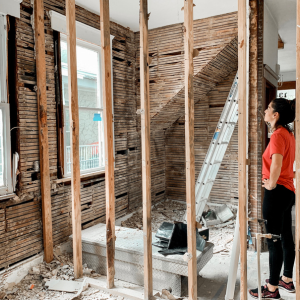
Sitting at a seller’s kitchen table, I usually end up saying the same thing. Your roof picks your buyer, not your kitchen.
Government-backed loans carry property standards. FHA appraisers look for a roof with at least two years of life left, and on a pre-1978 house, defective paint has to be scraped and repainted before the loan closes. Missing handrails, non-functional heat, exposed wiring, water intrusion, and termite damage all get flagged.
When an appraisal comes back subject to repairs, somebody does the work before funding. On a fixer, that somebody is usually you. Conventional appraisers apply a lighter standard, though health and safety issues still draw comments and a lender can condition the loan. If you want to know which defects tend to draw those comments, our breakdown of appraisal-required repairs in Washington lists the usual suspects.
So the pool narrows as condition drops. Rough houses get bought by cash investors, by renovation-loan borrowers using products like the FHA 203(k), and by handy owner-occupants with savings to fix what a lender won’t finance.
Sellers hear “203(k)” and assume the problem is solved. It can be, though the process adds steps: contractor bids, lender approval, a consultant on larger scopes, and a longer closing timeline. The useful question isn’t whether a financed buyer is pre-approved. It’s whether their loan officer has closed a renovation loan before.
What Are Your Options to Sell a House As-is in Washington?
Choose wrong here, and you can burn four months, two price reductions, and a failed inspection, only to net less than the cash offer you waved off in week one.
You have three real paths, plus one hybrid.
List on the MLS with a broker, priced as a fixer, and let the open market sort it out. Maximum exposure, maximum patience, and financing contingencies come with the territory.
Sell direct to a cash home buyer or local investor. One walkthrough, a written offer, closing on your timeline, no lender underwriting the house. You trade some gross price for certainty. Companies like Northwest Real Estate Solutions work this way across Washington, and a straight cash offer gives you a floor to measure everything else against.
Handle it yourself. FSBO saves the listing commission and costs you marketing reach, showing coordination, and contract drafting. On a distressed property, the buyers who find you unassisted are mostly investors anyway.
The hybrid: list it, but market it to the investor pool, priced to move in a short window. This works on teardown lots in Seattle and Tacoma where builders compete for the dirt. That same investor demand reaches south into Pierce County, where we buy houses in Tacoma, WA in any condition.
How Do You List an As-is Home with a Real Estate Agent?
“Will an agent even take my listing?” Yes. The right one will be glad to have it.
Interview for fixer experience specifically. An agent who moves updated homes in Issaquah may have never negotiated around a failed septic or sold a house with a red-tagged furnace. Ask how many properties in current condition they’ve closed in the last two years.
Insist on a comparative market analysis built from as-is sales. If the CMA leans on remodeled comps with a vague repair deduction, you’ll list too high, sit, and cut. Price cuts on a fixer tell buyers to wait you out.
On a house with known problems, I like a pre-listing inspection, a stance that irritates some brokers. The defects are coming out regardless, and a seller who already knows what’s in the crawlspace negotiates from strength instead of shock. And if a buyer’s inspector already turned up a list, you can still sell a house that failed inspection in Washington.
If the house is vacant, call your insurance agent. Standard homeowners coverage isn’t written for unoccupied buildings, and a leaking supply line in January is a bad way to learn that.
Commissions are negotiable, and on lower-priced properties in Aberdeen or Bremerton, a flat-fee structure sometimes pencils better.
How Do You Sell a House Directly to a Cash Buyer in Washington?
A cash offer is built backward. The buyer estimates what the finished house resells for, subtracts the renovation budget, subtracts carrying and closing costs, subtracts their profit, and what’s left is your number.
The process is short: a walkthrough, usually under an hour, then an offer within a day or two. No appraisal, no repair conditions.
Don’t clean for it. In that hour I’m looking at the roof, the panel, the crawlspace, and the layout, then writing a scope of work. A tidy house doesn’t move my number, and a cluttered one doesn’t scare me. What helps is opening the outbuildings and telling me what I can’t see, like where the oil tank used to be.
Closings commonly land between one and three weeks, through a Washington escrow and title company.
Ask three things of any cash buyer. Proof of funds. Whether they intend to assign the contract. What earnest money they’ll put up and when it goes hard. Assignment isn’t automatically bad, though a wholesaler who signs your contract and then shops it can cost you weeks if nobody turns up. Run those same questions past every one of the Seattle cash buyers on your list.
Where investors earn their keep is the messy stuff: probate timelines, back taxes, code enforcement notices, liens nobody knew about. I’ve bought houses where the title search turned up a forty-year-old contractor lien, and the escrow team just cleared it.
How Do You Price a Fixer-upper House in Washington?
Zillow gives your house a number, and that number comes from houses with working furnaces and updated bathrooms. On a fixer, it’s a ceiling, not a starting line.
Real pricing works from after-repair value backward. Start with what the house sells for once it’s fixed, based on recent closed sales within a mile with your bed and bath count. Subtract the repair scope at contractor pricing, not YouTube pricing. Subtract holding costs, then subtract a margin, because nobody renovates for free.
Geography swings this hard. A roof crew charges a similar rate in Longview and in Kirkland. Finished value doesn’t cooperate. King County’s median sale price hit $845,000 in August 2026 while Ferry County’s sat at $202,500, per the same NWMLS report.
A $60,000 renovation makes sense against a Bellevue resale and destroys the economics on a rural Eastern Washington property, so the as-is discount looks deeper out there.
Get two or three contractor bids even when you don’t plan to do the work, and write the scope down room by room first. Three contractors quoting three different jobs tells you nothing.
How Much Money Will You Make From an As-is Home Sale?

List price is vanity. Net proceeds pay your bills.
Start with the excise tax. It surprises people who’ve sold houses in other states. Washington’s real estate excise tax is the seller’s obligation, and the state portion is graduated, running from 1.1 percent up to 3 percent depending on sale price under RCW 82.45.060. Cities and counties add a local rate. The Department of Revenue’s REET page has the current brackets, and the thresholds adjust every four years, with the next set taking effect January 1, 2027.
Commissions come next if you list, then title insurance, escrow fees, recording, and prorated property taxes. Payoffs come off the top: the mortgage, a second lien, unpaid utilities, delinquent taxes, judgments. Escrow finds these whether you mention them or not.
Selling on the open market adds costs nobody puts in the spreadsheet. Two more months of payments and insurance, plus utilities on an empty house. A concession after inspection, normal on distressed property rather than rare.
Cash sales strip out commissions and repair credits, and most direct buyers cover standard closing costs. Gross price lands lower, and the gap is often narrower than the headline suggests.
About taxes on your gain: if the house was your primary residence, a federal exclusion may shelter part of your profit, and inherited property gets a stepped-up basis. Both have conditions worth thirty minutes with a CPA.
Repair the House, Sell As-is, or Sell to a Cash Investor: Which Is Best?
Drive through Hazel Dell or Orchards, and you’ll pass three versions of this decision on the same block. One house mid-renovation, one listed with a handyman-special sign, one already sold quietly to a builder.
Fixing first makes sense under narrow conditions. You have the cash without borrowing, the repairs are cosmetic, and you can supervise the work. Kitchens, paint, and flooring return the most. Structural work rarely returns what it costs.
The middle cases get hardest, and they come down to supervision. A retired seller in Puyallup with a truck and a brother-in-law who frames for a living is in a different position than a daughter in Arizona managing contractors by phone. Same house, two different answers.
I’d push back on the advice that you always need to fix a house before selling. You don’t. You need to know what the house is worth in each condition, and what it costs to get there. Often, on a property deferred for a decade, the numbers say don’t.
Frequently Asked Questions
Do I still have to disclose problems if I’m selling as-is?
Yes. Washington requires most residential sellers to deliver a Form 17 seller disclosure statement under RCW 64.06. “As-is” describes what you’ll repair, not what you can hide. The buyer generally has three business days to review it and can back out. Some transfers, including certain estate and foreclosure situations, are exempt, so ask your escrow officer which rules apply.
How fast can a sale actually close in Washington?
A cash sale with clear title can close in about seven to fourteen days, limited mostly by the title search and escrow’s schedule. Financed sales run thirty to forty-five. If there’s a lien, a probate matter, or a missing heir’s signature, everything waits on that.
Can I sell after I’ve received a foreclosure notice?
Usually, yes. In Washington’s nonjudicial process, you can sell up until the trustee’s sale happens, and a full payoff stops it. Reinstating by catching up missed payments has a harder cutoff: eleven days before the sale date. Start early, because waiting until the final week narrows your options to whoever can fund immediately.
What if there’s a tenant in the house?
The lease travels with the property. A month-to-month tenancy has its own notice requirements under the Residential Landlord-Tenant Act, and investor buyers often prefer keeping the tenant. Tell buyers up front, since a surprise occupant kills more sales than a bad roof.
Is an as-is cash offer just a lowball?
Some are. A fair one shows its math: after-repair value, repair estimate, holding costs, and margin. Ask for that breakdown. If a buyer won’t show you how they reached the number, you’ve learned something useful.
If you’re weighing this for a house in Vancouver, Tacoma, Yakima, or anywhere else in Washington, it costs nothing to get the numbers in front of you. Reach out to Northwest Real Estate Solutions for a no-obligation offer, compare it against what a listing would realistically net, then decide. If selling isn’t the right answer, that’s a fine outcome too.
Helpful Washington Blog Articles
- Sell a House with Water Damage in Washington
- How to Sell an Apartment in Washington
- How Long Does It Actually Take to Sell a House in Washington
- How To Attract Buyers For Distressed Property In Washington
- Selling a House in a Trust After Death in Washington
- Can Someone Take Over My Mortgage in Washington
- Can I Sell My House For Less Than Appraised Value In Washington State
- Can I Sell My House Below Market Value in Washington
- How to Sell a House That Needs Repairs in Washington
- Can You Sell a House As-is Without an Inspection in Washington