

A Beaverton landlord called me on a Friday wanting keys handed over by the first of the month. He had two tenants on month-to-month agreements, a water heater limping through its last winter, and a buyer who wanted the place empty. We closed, just not on his timeline. Selling a rental in Oregon drags in moving parts a regular home sale never touches: tenancy law, depreciation, and a buyer pool split between owner-occupants and investors. Miss one, and I’ve watched net proceeds shrink quietly more than once. What follows is what I’ve picked up buying houses around this state, including the parts that cost people real money.
How Do Taxes Differ Between Selling and Renting in Oregon?
For years, I told owners that moving back into a rental for two years would wipe out the tax bill, and I was half wrong about it.
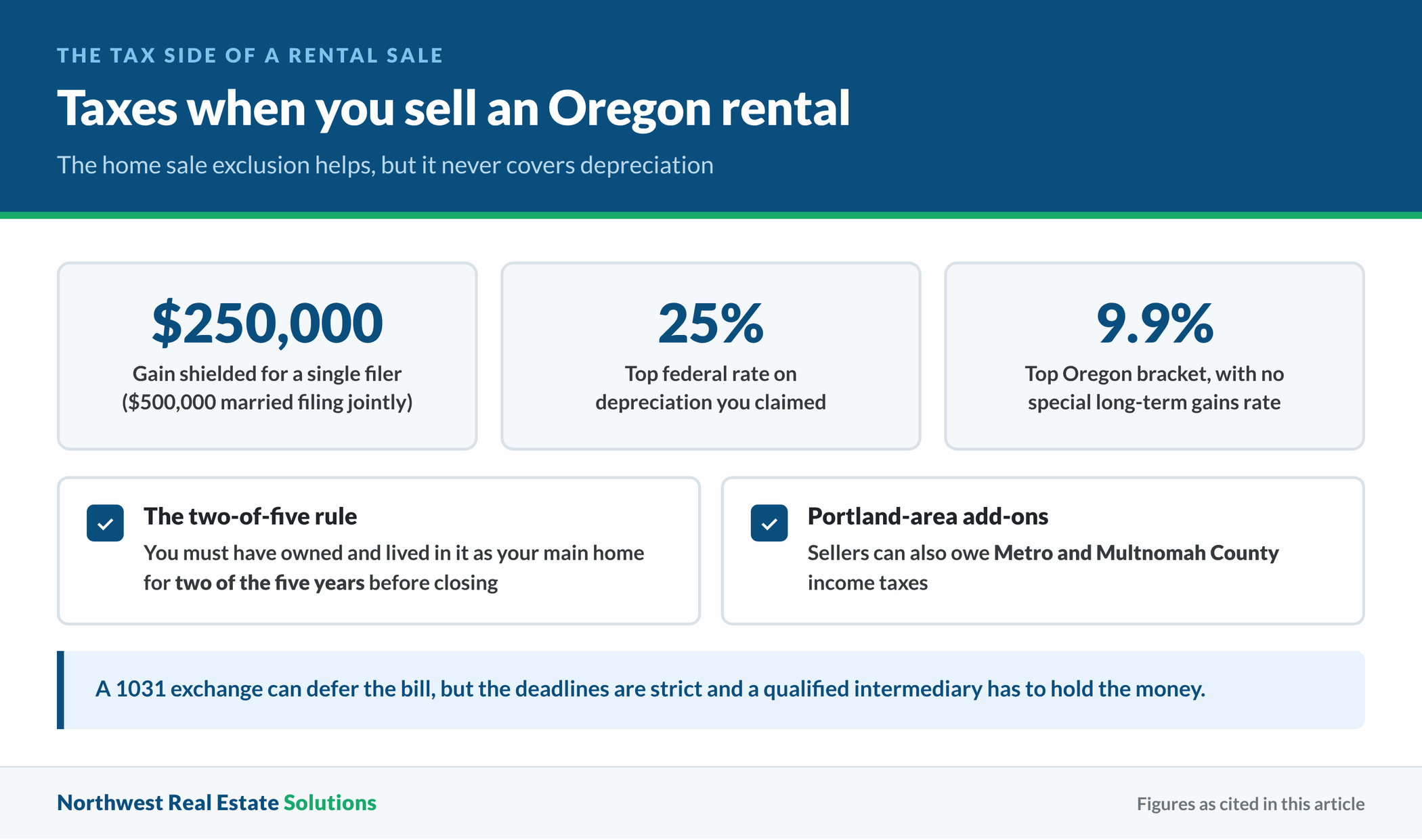
Here’s the rule that part was based on. If you’ve owned and lived in the place as your main home for two of the five years before closing, federal law lets you shield up to $250,000 of gain as a single filer, double that if you’re married filing jointly. Plenty of Oregon landlords started out as homeowners, rented the house during a job move, and still qualify. If you’re counting months, here’s how long to live in a Portland, OR home before selling.
Depreciation is where my old advice fell apart. Every year you claimed depreciation on that rental, you lowered your basis, and that chunk of gain gets pulled out and taxed separately at a federal rate of up to 25 percent. The exclusion never covers it, no matter how small your total profit looks. A seller who rented a Salem bungalow for a decade can owe tax on a sale she thought was fully sheltered, something I’ve run into more than once buying houses in similar situations.
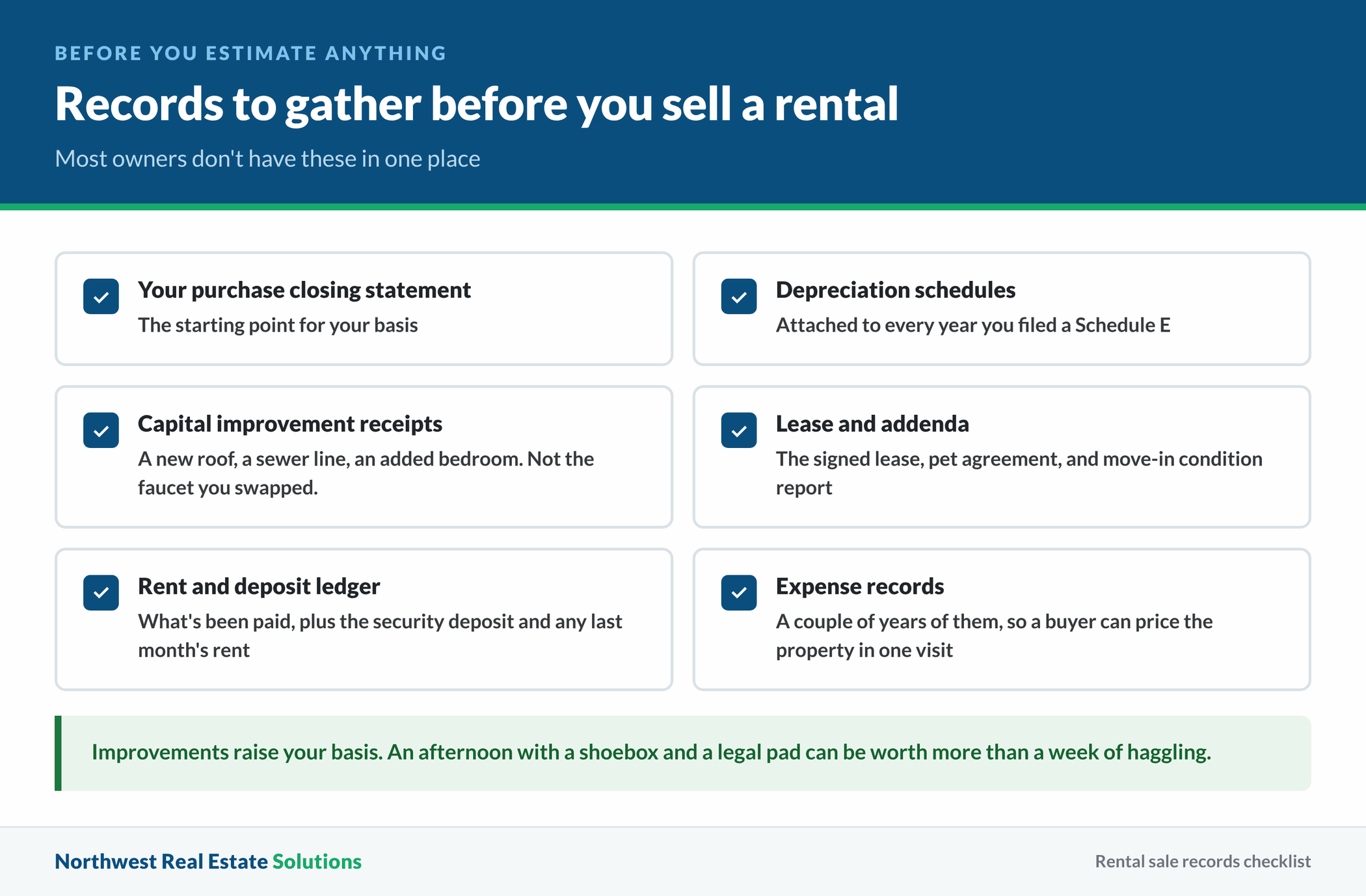
Before you can estimate any of this, you’ll need paperwork, and most owners don’t have it in one place. Pull the closing statement from when you bought it, the depreciation schedules attached to every year you filed a Schedule E, and receipts for capital improvements: the new roof, the sewer line replacement, and the bedroom added over the garage. Improvements raise your basis. The faucet you swapped last spring doesn’t. I meet landlords all the time who paid cash for a furnace six years ago and never told their accountant. An afternoon with a shoebox and a legal pad can be worth more than a week of haggling over price.
A question I hear constantly: what if I never actually claimed depreciation? Don’t assume that solves the problem on its own. Ask your CPA directly and ask early, because it’s a miserable thing to learn the following April when the proceeds are already spent.

Then there’s the state layer. Oregon has no special rate for long-term gains; your profit stacks onto your other income and gets taxed at ordinary brackets, topping out at 9.9 percent. Portland-area sellers can owe Metro and Multnomah County income taxes on top of that. Compare that to a neighbor across the Columbia in Vancouver, and you’ll see why timing a sale into a lower-income year matters so much here. If you’re retiring next year, between jobs, or your spouse is about to drop to part-time, the same sale can land in a very different bracket.
Holding versus selling comes down to arithmetic, not sentiment. Figure your annual return on investment from rental income after vacancy, property management, maintenance, and property taxes. Then weigh it against the equity sitting idle. If a Deschutes County rental throws off a three percent return on a half-million in trapped equity, that money is underperforming, and I’ve watched owners sit on that math for years before admitting it.
Run the honest version of that math, not the flattering one. Count the turnover you’ll eat when the current tenant leaves: paint, carpet, cleaning, and a month of no rent while you lease it back up. Count the capital items you already know are coming, because a roof at fifteen years isn’t a surprise; it’s a scheduled bill. Then add the parts that don’t show on a spreadsheet, like the hour you spend on the phone with a plumber during your workday, something I’ve eaten more mornings than I’d like to admit. Some landlords look at that column and decide the property is fine. Others realize they’ve been subsidizing a hobby.
Want to defer the whole bill instead? A 1031 exchange rolls proceeds from one investment property into another, though the deadlines are strict and a qualified intermediary has to hold the money. You’re still a landlord either way. Talk to a CPA who handles Oregon returns before you sign anything, because the depreciation math is specific to your filings, not to a blog post.
Do Oregon Rental Laws Affect Your Decision to Sell?
Sign a purchase agreement, hand over the keys, and the tenant moves along. Oregon’s landlord-tenant code says otherwise once a tenant has been in place past the first year.
Closing on the sale doesn’t end anything by itself. Your buyer inherits the tenancy, the lease terms, and the security deposit. During a tenant’s first year of occupancy, a month-to-month tenancy can be ended with at least 30 days’ written notice. After that first year, no-cause terminations are off the table, and you need a qualifying landlord reason under ORS 90.427 with at least 90 days’ written notice.
Selling to a buyer who’ll live there is one of those qualifying reasons. The sequence trips people up: you have to already hold the accepted offer, and written evidence of that offer goes to the tenant along with the notice. You can’t clear the house first and shop for an owner-occupant later. A 2025 amendment added an alternative shorter-notice option paired with a payment to the tenant outside Portland and Milwaukie, so confirm the current version with Oregon REALTORS or a landlord-tenant attorney before you draft anything.
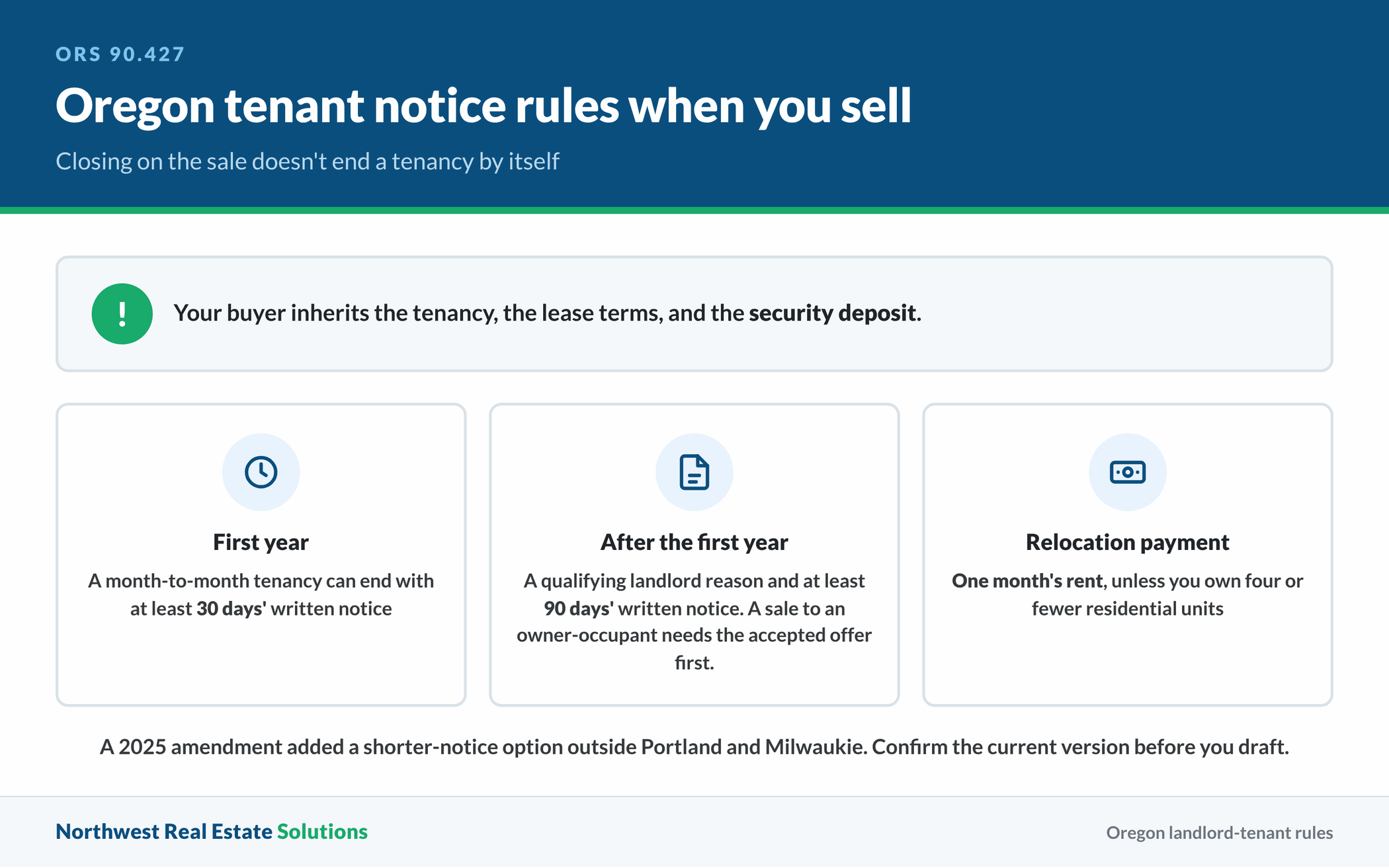
Relocation assistance equal to one month’s rent also comes into play for qualifying-reason terminations, with an exemption for landlords holding an ownership interest in four or fewer residential dwelling units.

Tell your tenant you’re selling before they hear it from a stranger with a lockbox key. The next two months hinge on that single conversation. A tenant who feels blindsided gets creative: dishes stacked in the sink at showing time, the dog loose in the yard, and a sudden inability to answer texts. A tenant who’s been told straight, “I’m selling; your lease rides along; here’s my cell number,” often turns into the smoothest part of the sale. If you genuinely need the place empty and the notice math doesn’t work, ask what a voluntary move would actually take. Some tenants want time more than money, and a written agreement signed willingly beats a notice that starts a countdown and a grudge.
Selling to an investor has a quiet advantage that spares sellers a lot of struggle: an occupied property stays occupied, with no notice clock, no relocation payment, and no vacancy. Sellers who need the tenancy handled cleanly often call Northwest Real Estate Solutions for exactly that reason. Would you rather negotiate a move-out with someone paying your mortgage or sell the agreement along with the building?
However you sell, the closing itself has a tenant checklist attached. The security deposit doesn’t come back to you; it transfers to the buyer as a credit at closing, along with any last month’s rent you collected up front. Rent prorates on the closing date. The tenant needs written word of who holds the deposit now and where to send the next payment. Gather the signed lease and any addenda, the move-in condition report, the pet agreement, and a ledger of what’s been paid. In my experience buying rental properties, most buyers will also ask for an estoppel certificate, a short statement the tenant signs confirming the rent amount, the deposit, and that no verbal side deals exist. It feels like bureaucracy until the day a tenant insists the previous owner promised free parking.
One more piece agents skip: tenants have the right to quiet enjoyment during the whole process. Showings require proper notice. A frustrated tenant can make a listing miserable, and I’ve seen more sales die over access friction than over price. Our guide on how to sell an investment property in Portland, OR, covers the legal side for Portland landlords in more detail.
How Do Private Money Loans Ease Oregon Property Financing?
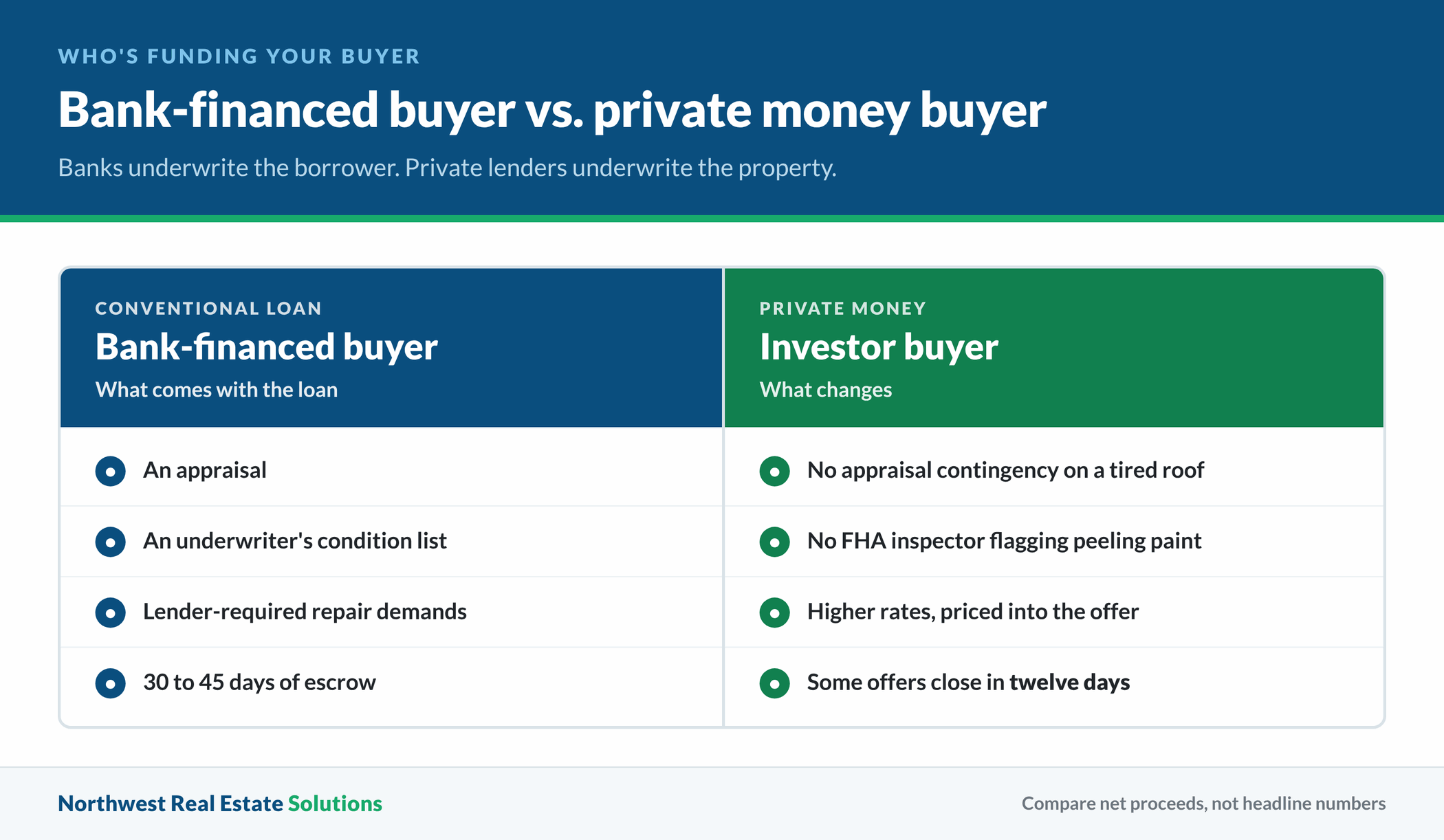
Private money is the most misunderstood financing tool in Oregon real estate investing, and it’s the reason some offers close in twelve days while others crawl.
Banks underwrite the borrower. Private lenders underwrite the property. That difference shows up at the closing table, since a conventional buyer’s loan drags an appraisal, an underwriter’s condition list, and a lender-required repair demand into your transaction. Investor buyers funded by private lending skip most of that. No appraisal contingency on a tired roof. No FHA inspector flagging the peeling paint on a 1950s Medford rental.
You need speed more than you used to. Statewide, Oregon’s median sale price was $506,889 in August 2026, with homes taking a median of 39 days to sell, and the number of homes sold that month dropped 1.7 percent from a year earlier. In Bend, the median price over the three months ending September 2026 was about $700,000, down 2 percent year over year, with homes selling in roughly 42 days. Add 30 to 45 days of escrow after that, and you’re carrying the property for three months while demand softens.

So how do you tell a real cash buyer from someone who plans to shop your contract to the highest bidder? Start with three questions. Where are the funds coming from, and can I see a statement or a lender letter? How much earnest money are you putting up, and when does it become non-refundable? Which title or escrow company do you use, and may I call them? Someone who closes regularly answers all three without flinching and has a title officer who’ll vouch for them. Someone who hedges on all three is selling your contract, not buying it. Keep your rent roll, current leases, deposit ledger, and a couple of years of expense records in one folder, and a serious buyer can price the property in a single visit.
Private money also opens doors on the sell side. Seller financing, where you carry a contract and collect payments, spreads your gain across years instead of detonating it in one tax year. Some retiring landlords prefer the income stream to a lump sum.
If you do carry paper, have a licensed professional draft every term on the page: down payment, rate, length, whether there’s a balloon, who services the note and sends the statements, who pays the property taxes and insurance, and exactly what happens the month a payment doesn’t arrive. Carrying a contract is still a job, just a quieter one than fixing water heaters.
Rates on private lending run higher than bank loans, which honest buyers will tell you up front. That cost gets priced into their offer, so you’ll want to compare net proceeds, not headline numbers. An offer with no repair credits, no commission, and no carrying costs often beats a higher listed price that bleeds for four months. Teams like Northwest Real Estate Solutions fund through private channels specifically so closings aren’t hostage to an underwriter in another state.
Frequently Asked Questions
Can’t You Just Raise Rents and Wait Out the Market?
Sometimes, yes. But deferred maintenance compounds, employment shifts move tenants, and a property that needs $40,000 in work rarely gets cheaper to fix. Waiting is a position, not a plan.
What Does the 50% Rule Mean for a Rental Property?
It’s a back-of-the-napkin screen investors use: assume half your gross rental income disappears into operating expenses like taxes, insurance, repairs, vacancy, and property management. Mortgage payments sit outside that estimate. The rule isn’t gospel, and older Oregon homes with original plumbing can blow past it, but it’s a fast reality check on whether a rental is really earning what the spreadsheet claims.
What Rights Do Renters Have in Oregon When the Property Sells?
Your tenant keeps the lease, the agreed rent, the security deposit, and the right to proper notice before any showing. A sale doesn’t void a fixed-term agreement, and after the first year of occupancy, a termination requires one of the qualifying landlord reasons described above, with the longer notice period and, for larger landlords, the relocation payment. Tenants can also request written confirmation of who holds the deposit after closing.
Is Selling Your Rental by Owner a Good Idea?
It can work if you have the time, a realistic price, and patience for buyer financing to fall apart once or twice. Where FSBO sellers lose money is disclosure and negotiation, not marketing. Selling a tenant-occupied property by owner gets harder still, since the paperwork around notices and deposit transfers has to be right. If you’d rather not run that process alone, a direct cash sale removes most of it.
What Taxes Come Due When You Sell a House in Oregon?
Oregon charges no state transfer tax statewide, though Washington County does collect one. You’ll settle prorated property taxes at closing, then face federal capital gains plus Oregon income tax on your profit the following April. Rentals add the depreciation piece covered earlier in this article, which is the single most common surprise on a landlord’s return. Get an estimate from your tax preparer before you accept an offer, not after.
We Buy Rental Properties in Portland and Across Oregon
Portland is our home market, and rentals there are moving slower than they were. RMLS reported 2,013 pending sales across the Portland metro in August 2026, down 11.5 percent from a year earlier. Fewer buyers in contract means more time on the market for a rental that needs work or comes with a tenant.
We’re cash home buyers in Portland, and we buy houses across the metro and the rest of the state. West of the city, we buy houses in Hillsboro. Down the valley, we’re investor home buyers in Corvallis. You can see every area on our “We Buy Houses in Oregon” page.
Sell Your Oregon Rental With the Tenant in Place
If you’re weighing a sale on an Oregon rental and want someone to walk the numbers with you, we’re happy to talk it through, tenants and all. No pressure, no obligation, and if holding turns out to be the smarter move, we’ll say so.
If you’d rather skip the notice clock, the relocation payment, and the vacancy, we can buy your rental as it sits, lease and tenant included. We’ll walk the property, review the rent roll, and give you a cash offer in writing. Put it next to your net from a listing and choose the path that fits.
Have more questions first? Check out other frequent questions. When you’re ready, fill out our quick contact us form or use the short form below.
Helpful Oregon Blog Articles
- Who Is Responsible For HOA Fees At Closing In Oregon
- Guide To Oregon Inheritance Laws
- Paperwork For Selling Your Oregon Home by Owner
- Understanding Squatters’ Rights In Oregon Real Estate
- How To File A Quitclaim Deed For Real Estate In Oregon
- Homeowners Insurance When Selling a House in Oregon
- Can You Sell a House with Asbestos in Oregon
- How to Sell a House with Mold in Oregon
- Can the Seller Back Out of a Contract in Oregon?
- How Much Equity Do I Need to Sell My House in Oregon?
- Taxes When Selling an Inherited House in Oregon
- Do Open Houses Still Work When Selling a Home in Oregon?
- How to Sell a House with Flood Damage in Oregon